
Municipal Councillors in Europe
Objectives
After having finished their work on local state-society relations in Europe by publishing two book most members of the former EURA Working Group on Local State-Society Relation in Europe have formed a new working group. This working group is focussed on the work of municipal councillors based on a Europe-wide survey.
In a way, it is a successor to a working group that conducted a survey of municipal councillors in the late 2000s. This survey only covers councillors from municipalities with more than 10,000 inhabitants; the one now planned will also include councillors from smaller municipalities – which requires sampling in most countries.
For preparing the survey and in particular the questionnaire a first work shop took place in Dubrovnik on 3 and 4 June 2022 and a second one in Darmstadt on 29 and 30 October 2022. Furthermore, a Zoom meeting with more than 30 participants was held on 3 February 2023 to discuss on a more or less final version of the questionnaire. It is planned to complete the survey by the end of 2023.
The working group met in Olomouc in the Czech Republic on November 22 and 23 2024 to clarify final questions regarding the generation of the common data set resulting from the survey of municipal councillors and to discuss contributions to a two-volume publication to be published by Palgrave Macmillan.
Below some photos taken during the meeting.
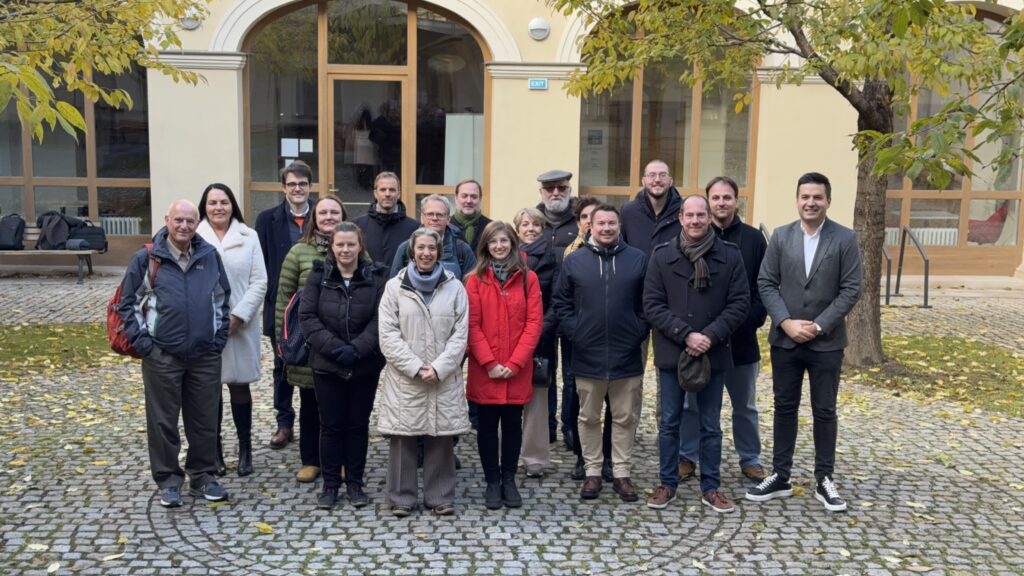
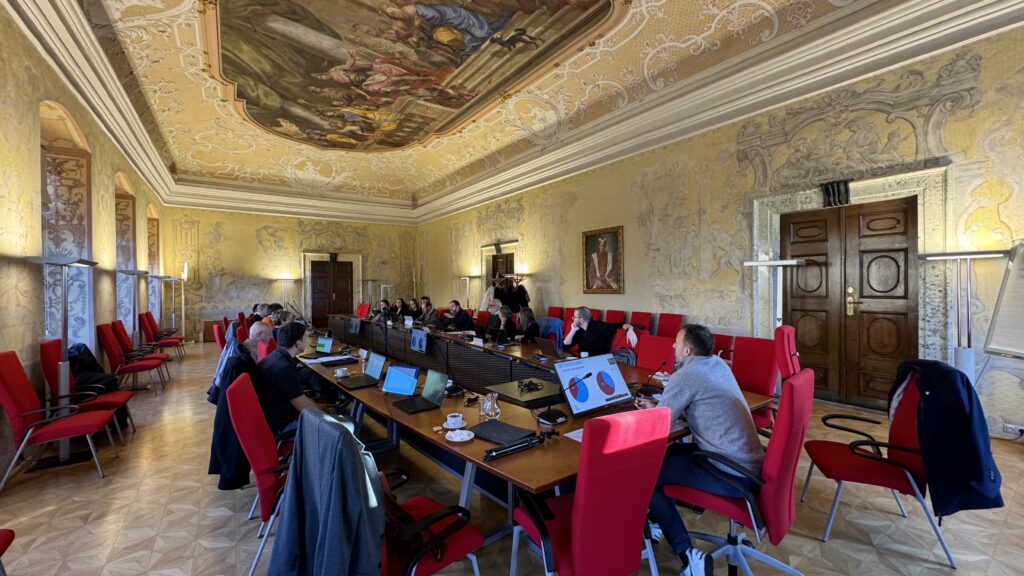
The EURA working group met in Sarajevo on 16 and 17 May 2024 (see photos below) to discuss final issues relating to the publication of the results of the survey of municipal councillors. The two-volume publication will be published by Palgrave Macmillan in 2026.
Further activities of the working group were also discussed at this meeting. The members of the group agreed to continue the work with another survey of mayors, which will be the third survey of mayors conducted by the group during the last 20 years. Two workshops are planned for the preparation of the questionnaire for this survey.
The first will take place from 14 to 16 November 2025 in Darmstadt and the second from 7 to 10 May in La Cristalera (near Madrid).
The working group welcomes new partners who are interested in this survey. If you would like to join the working group, please contact Björn Egner (bjoern.egner@tu-darmstadt.de).

The members of the EURA working group on municipal councillors in Europe aim to strengthen their relationships through joint teaching activities. Such activities can be financially supported by ERASMUS as part of the Blended Intensive Programme (BIP). This programme promotes joint courses between partners from different EU member states and countries participating in ERASMUS. Partners from different universities in these countries first prepare a seminar/course ‘at home’ about a certain topic (e.g. local government in comparison), followed by a ‘virtual phase’, an online meeting of all participants, and ending with a kind of summer school in which all partners meet in person and present and discuss what they have prepared in the first phase.
The first BIP took place from 23 to 27 June 2025 in Darmstadt with participants from Darmstadt, Madrid, Turku, Zurich and Warsaw. Lecturers from the participating universities were Björn Egner, Linnéa Henriksson, Hubert Heinelt, Stefan Kalberer, Daniel Kübler, Marta Lackowska and Carmen Navarro.
Anyone interested in taking part in such a joint teaching activity should contact Hubert Heinelt (hubert.heinelt@tu-darmstadt.de). The staff at TU Darmstadt’s International Relations Office would help partners apply for funding for further BIPs.

The EURA working group met at the Technical University of Darmstadt on 15 and 16 November 2025. With 30 participants on site and another 16 colleagues online, this was the working group’s largest workshop to date. This is not only a sign that the working group is very active, but also a symbol of the large (geographical) spread that the group has experienced.
After completing the second survey of municipal councillors in Europe, the results of which will be published in two volumes by Palgrave Macmillan in early 2026, the group began preparing a new survey of mayors. The questionnaire for this survey is scheduled to be finalised at the next workshop, which will take place from 7 to 10 May 2026 in La Crisatlera (north of Madrid).
Some members of the working group will also be taking part in another project focusing on ‘Professionalisation and Politicisation of Local Government in Europe’ (PROFLOC). Based on a paper written by Filipe Teles and Hubert Heinelt, the participants agreed to draft country reports before the workshop in La Cristalera. Based on these drafts, a common structure for country contributions to a joint publication on this topic will be developed in La Cristalera. Using the country chapters, the actors in individual countries who operate in the conflicting areas of professionalisation and politicisation at the level of local government are to be identified. They are to become the target group for a survey at a later date.
As the group has grown in size and long-standing members have withdrawn (due to retirement or other reasons), it seemed appropriate to put into writing the informal rules that have guided the group’s activities for many years. This has been done in this paper, which was adopted by the working group at its meeting in Darmstadt.

Last updated: 02/12/2025